// 2026-08-05 · Weird & Wonderful · by Bob Smith
Real Ultimate Power: The Ninja Website That Invented a Genre
Real Ultimate Power is a 2002 fan site about ninjas, written in the voice of an unhinged ten-year-old. It is still online and still completely committed.
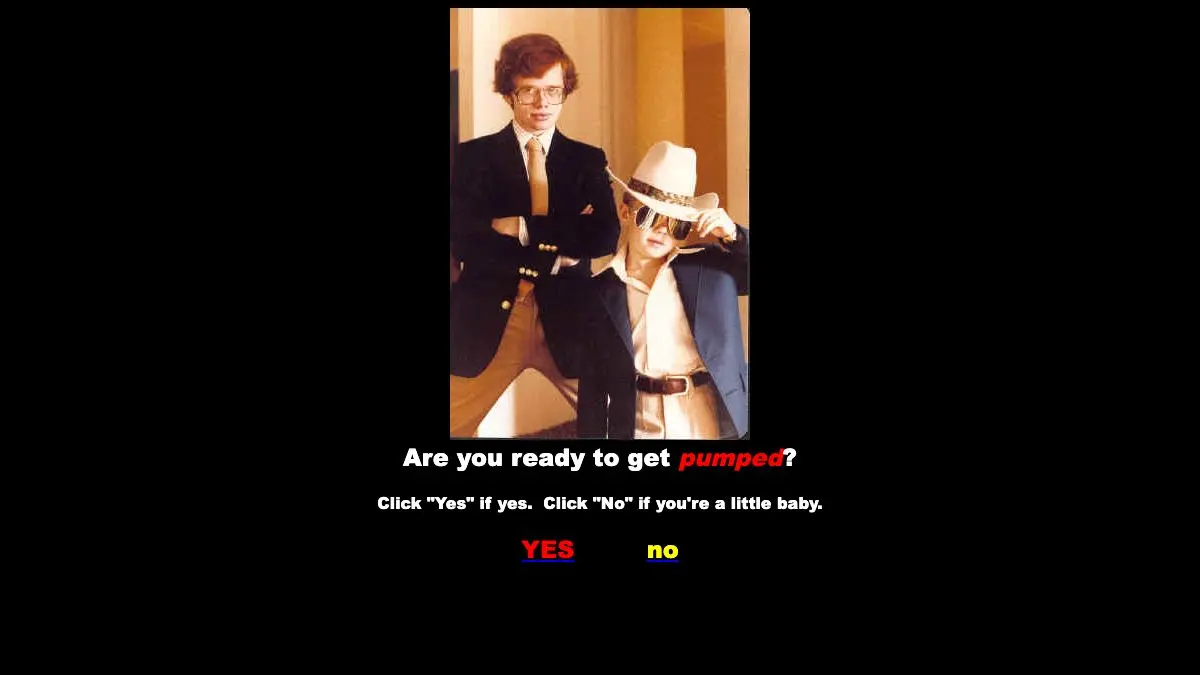
Real Ultimate Power is a website about ninjas, written in 2002 by someone pretending to be a ten-year-old who has thought about ninjas more than any human being should. It informs you, in complete seriousness, that ninjas are mammals, that ninjas fight all the time, and that the purpose of the ninja is to flip out and kill people. It is still online. It has not aged so much as fossilized.
What is Real Ultimate Power?
The author is Robert Hamburger, and the character is also called Robert Hamburger, a boy with unlimited conviction and no editorial supervision. The site is his ninja resource: facts about ninjas, poems about ninjas, drawings of ninjas, angry responses to people who have questioned the ninja facts, and an FAQ that answers questions nobody asked with information that is not true.
The comic engine is total, unbroken commitment. There is no wink to the audience anywhere on the site. The narrator is not performing irony, he is simply extremely excited about ninjas and increasingly frustrated that the world does not share his priorities. He gets defensive. He gets sidetracked into complaints about his own life. He returns, always, to the central thesis: ninjas are totally sweet.
In 2002 this hit the early web like a bomb. Forwarded email chains, forum signatures, AIM away messages. It came at a moment when the internet had plenty of jokes but very few voices, and this was a voice you could recognize in one sentence. It was quoted so widely that its phrasing entered the general vocabulary of online humor and stayed there.
It also crossed over into print. A book, REAL Ultimate Power: The Official Ninja Book, was published in 2004 and extended the persona at length, which was an unusual outcome for a website in an era when websites did not become books.
The lasting significance is structural. Almost every later strain of internet absurdism, the deadpan single-topic Twitter account, the aggressively sincere fan wiki for something that does not exist, the forum poster who never breaks character, traces back through this. Real Ultimate Power established that the funniest thing you can do online is refuse, for years, to admit that you are joking.
What can you do on Real Ultimate Power?
- Read the ninja facts. The core text, and still the most quoted material on the internet’s ninja question.
- Work through the FAQ. Questions the narrator has decided you were going to ask, answered with escalating impatience.
- Look at the drawings. Crude ninja illustrations, presented as documentary evidence.
- Read the poems. Yes, there is ninja poetry. Yes, it scans about as well as you would expect.
- Notice the web design. Tiled backgrounds, low-resolution GIFs, tables for layout. This is a preserved specimen of the pre-CSS web as much as it is a comedy site.
- Trace the influence. Read a page, then go and look at any modern absurdist account. The lineage is not subtle.
Tips to get the most out of it
Read it aloud. The humor is almost entirely rhythmic, built out of short declarative sentences that keep hitting the same emphatic note. Silent reading loses about half the effect.
Do not skim for the famous lines. Everyone knows the two or three quotes that escaped into the wider internet. The genuinely good material is in the second half of the pages, where the narrator drifts off topic into his own grievances.
Consider the date. This was written before social media, before the meme as a formal unit, before most of what we think of as internet culture. Judged against 2026 comedy it is quaint. Judged as an origin point it is remarkable.
Do not fix it in your head. The typos, the shouting, the inconsistent capitalization and the terrible images are the delivery mechanism. A clean, well-designed version of this site would not be funny at all.
Accept that parts are broken. Two decades of link rot have taken the interactive sections. What is left is the writing, which is what mattered.
Send it to someone under 25 with no explanation. Watching a person encounter this cold, without the context of it being a foundational text, is its own reward.
If you like Real Ultimate Power, also try…
- Homestar Runner: the other great early-2000s comedy site that never broke character and never went away.
- Ninja Burger: the same era, the same ninjas, applied to a fast food delivery service.
- Albino Blacksheep: the Flash-era archive where a great deal of this humor originally circulated.
- Zombo.com: a single joke, delivered with the same refusal to ever stop.
More preserved internet history in Weird & Wonderful, and more of the old web’s comedy in Entertainment & Fun.
Frequently asked questions
What is Real Ultimate Power?
Real Ultimate Power is a comedy website launched in 2002, written by Robert Hamburger in the persona of an intensely enthusiastic child who believes ninjas are real, historically accurate and extremely cool. It became one of the first genuine viral hits of the early web and spawned a published book.
Is Real Ultimate Power a real fan site?
No, it is a deliberate comedy piece. The persona is fictional and the writing is a sustained parody of unfiltered internet enthusiasm. Part of its early success came from readers who were not immediately sure, which is exactly the effect it was going for.
Is Real Ultimate Power still online?
Yes. The site remains up in something close to its original form, with the same low-resolution graphics and page structure it had two decades ago. Some interactive elements from the era, such as the old forums and guestbook, have not survived intact.
Why is Real Ultimate Power important?
It is one of the earliest examples of a sustained absurdist voice on the web, and a direct ancestor of a huge amount of later internet humor. The combination of total sincerity, escalating nonsense and complete refusal to break character became a template that countless sites, forums and social accounts have used since.