// 2026-08-05 · Learning & Education · by Bob Smith
SimplyScripts: A Free Library of Real Movie and TV Scripts
SimplyScripts indexes thousands of free movie, TV, anime and radio scripts, so you can read how the films you love were actually written before they were shot.
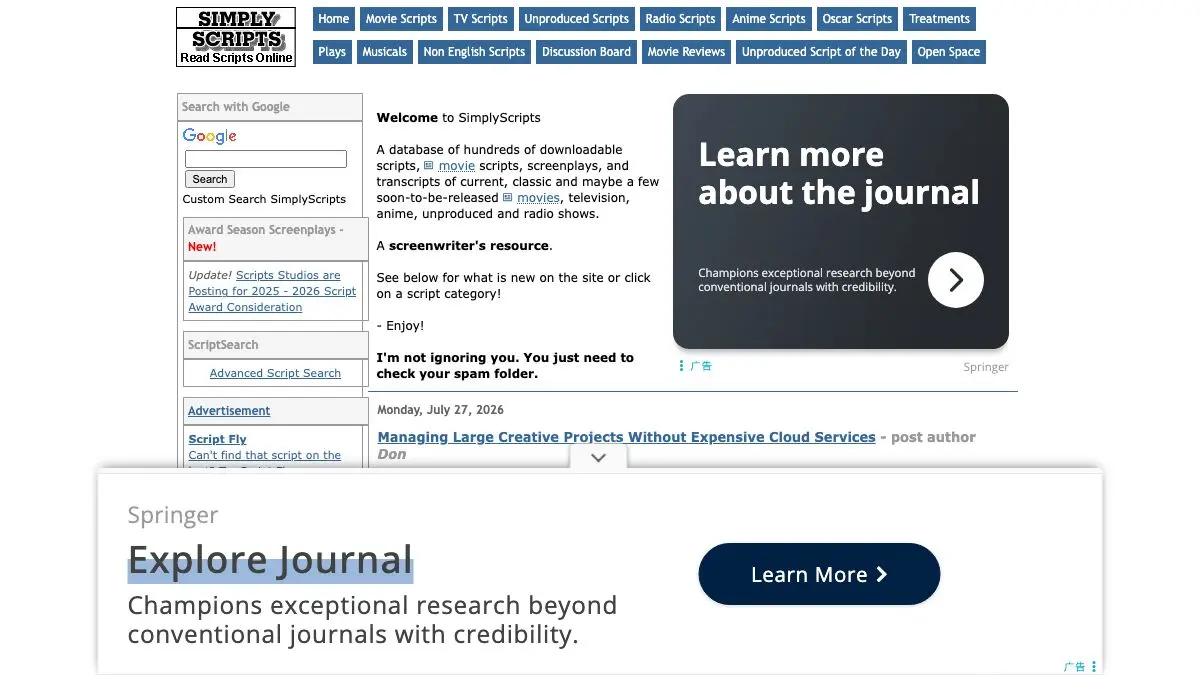
SimplyScripts is thousands of screenplays, indexed and free to read. Films you have seen a dozen times, in the form they existed in before anyone was cast, before the budget got cut, before the ending was changed in reshoots. If you want to learn how movies are actually written, this is the primary source, and it costs nothing.
What is SimplyScripts?
Screenwriting has an unusual property among crafts: the finished product is not the thing you make. A screenplay is an instruction set that gets converted into a film by several hundred people, and reading one is the only way to see what was on the page versus what arrived in the edit.
SimplyScripts has been collecting links to those pages since the late 1990s. It is not a hosting service so much as an index: it points at scripts wherever they live online, many of them posted by studios during awards season, when distributors publish PDFs for voters and everyone else gets to read them too.
The catalog is broad. Feature films sorted alphabetically and by genre, TV episode scripts, animation and anime, radio plays, and a section for unproduced and spec scripts. There are transcripts as well as true shooting drafts, and the site is generally clear about which is which, which matters more than beginners expect.
There is also an original-work side: writers submit their own unproduced scripts, and a message board has been running for years where people trade feedback and organize collaborations. It is one of the older screenwriting communities still standing.
The design is exactly what you would expect from a site that has been continuously useful since 1999, which is to say it is a lot of blue links on a plain page. Nobody has ever complained, because the alternative to a plain index of thousands of scripts is not having thousands of scripts.
What can you do with SimplyScripts?
- Read the script of a film you love. Search the alphabetical index, follow the link, and read the version that existed before the shoot.
- Compare a script to the finished film. Watch with the PDF open and you will spot cut scenes, rewritten lines and structural changes constantly.
- Study a genre systematically. Browse by genre and read five horror or comedy scripts in a row to see what the form’s conventions actually are.
- Read TV in seasons. Episode scripts show how television handles compression, cold opens and act breaks, which is a different craft from features.
- Find unproduced and spec scripts. A whole section of work that never got made, which is where you see how a spec is written to sell rather than to shoot.
- Read amateur submissions. Original scripts posted by site users, useful both for feedback and for calibrating your own work.
- Use the discussion board. A long-established forum for screenwriters swapping notes and critique.
Tips to get the most out of it
Check whether you have a script or a transcript. A transcript is someone typing out the finished film; a screenplay is the document that came first. Only one of them teaches you anything about writing, and confusing the two will give you a strange idea of how scripts look.
Start with a movie you know by heart. Reading a script cold is just reading. Reading the script of a film you can already picture turns every difference into a lesson about what changed and probably why.
Read the action lines, not just the dialogue. Beginners skim to the dialogue. The actual craft is usually in how sparse and rhythmic the description is, and how much a good writer refuses to specify.
Grab awards-season scripts while they are up. Studios post them for a window and links rot afterward. If you find a PDF you care about, save it.
Note the draft date on the title page. Early draft, shooting script and final revision are wildly different documents, and knowing which one you are holding changes what it is evidence of.
Read one script a week rather than ten in a night. Structure is only visible when you have finished something and had time to think about its shape. Bingeing produces the illusion of study.
If you like SimplyScripts, also try…
- PlayPhrase.me: search a phrase and watch every film clip where somebody says it.
- A Good Movie to Watch: hand-picked film recommendations for when you need the finished version.
- Project Gutenberg: the same free-primary-source idea, applied to public domain books.
- Global Grey eBooks: well-formatted free ebooks, including a good stock of classic drama.
More free study material in Learning & Education, and more to watch in Entertainment & Fun.
Frequently asked questions
What is SimplyScripts?
SimplyScripts is a long-running directory of freely readable screenplays. It indexes movie scripts, TV episode scripts, anime, radio plays and unproduced work, linking out to wherever each script is hosted. It also publishes original scripts submitted by amateur writers and runs a discussion board for screenwriters.
Is SimplyScripts free?
Yes. Browsing the index and following the links costs nothing and requires no account. The site is essentially a curated set of links to scripts hosted elsewhere on the web, plus a section of original work submitted directly by writers.
Is it legal to read scripts on SimplyScripts?
SimplyScripts links to scripts that are already published online, many of them released by studios for awards consideration or posted for promotional purposes. Copyright still belongs to the rights holders, so these are for reading and study, not for reproducing or producing. If a rights holder objects, the link comes down.
How do I use scripts to learn screenwriting?
The most useful exercise is reading the script of a film you know well, because you already have the finished version in your head and can see exactly what the page did to get there. Pay attention to how much is left unwritten, how action lines are paced, and how scenes start late and end early.