// 2026-08-05 · Data & Research · by Bob Smith
ImportYeti: Look Up Which Factories a Company Actually Buys From
ImportYeti turns US customs records into a searchable database, so you can see which overseas suppliers ship to a given company and how much they send.
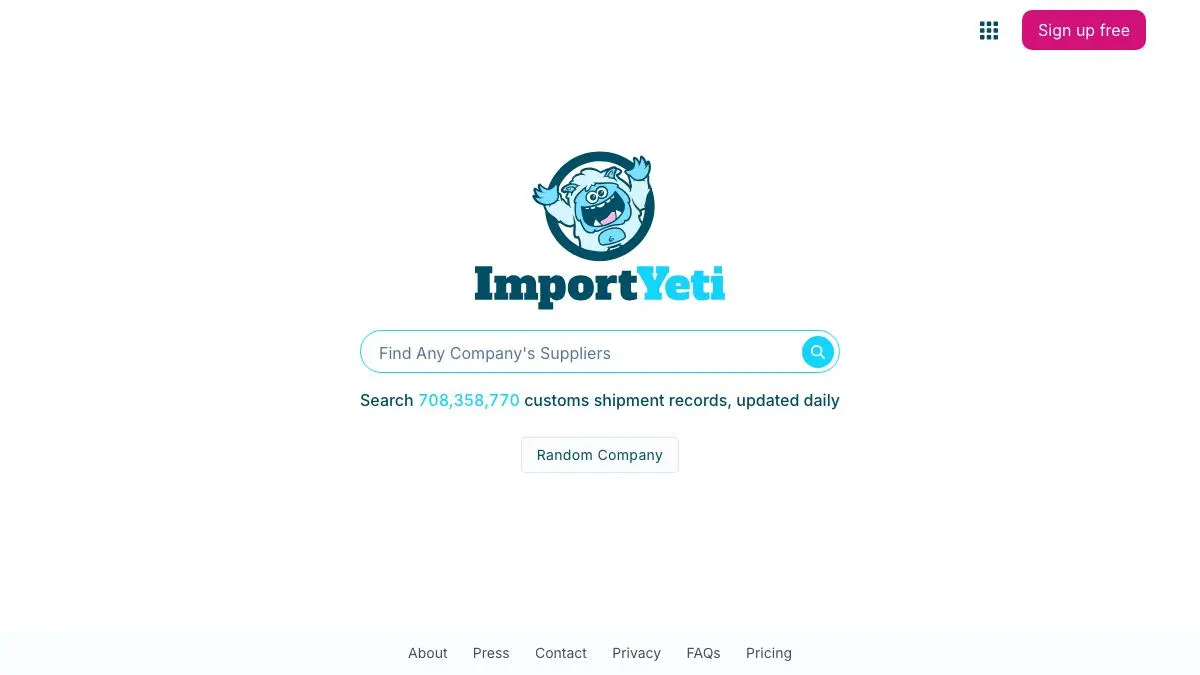
ImportYeti lets you type in a company name and see who makes their stuff. Not a guess, not a press release, the actual shipping records: which supplier in which country sent how many containers to which importer, with the cargo description the customs paperwork carried. It is public data that has technically been available for years, and it was effectively unusable until somebody built a decent search box on top of it.
What is ImportYeti?
Every container ship arriving at a US port generates a bill of lading, and for ocean freight that document is public record. Shipper, consignee, port of loading, container count, a short cargo description. In aggregate this is an extraordinarily detailed picture of what the United States buys and from whom, and for most of its existence it sat in bulk data feeds that only trade-data firms with five-figure subscriptions bothered to touch.
ImportYeti made it searchable and gave most of it away free. Type in a brand, get its suppliers. Click a supplier, get its other customers. That second move is the one people find slightly startling, because it means you can start from any company and walk sideways into everyone else buying from the same factory.
The obvious audience is people sourcing products. If you want to manufacture something and you know which existing brand makes a version you admire, their supplier list is a very direct shortcut past months of trade-show wandering. Procurement teams use it for exactly this.
The less obvious audiences are journalists, researchers and analysts. Supply chain reporting frequently starts here, because it is one of the only ways to independently connect a Western brand to a specific overseas facility without relying on the brand’s own disclosure. Investors use it for demand signals: a company whose container volume has quietly doubled is telling you something before the earnings call does.
It is worth being clear-eyed about what the data is not. It is ocean freight into the US only, so nothing arriving by air or over a land border shows up. The named shipper is frequently a trading company, an agent, or a subsidiary rather than the factory itself. Cargo descriptions are written by freight forwarders in a hurry and range from precise to “GENERAL MERCHANDISE.” And importers can apply for confidentiality treatment, which removes them from the public feed entirely, so an absence proves nothing.
What can you do with ImportYeti?
- Look up a company’s suppliers. Search an importer by name and see the overseas shippers sending to them, ranked by shipment volume.
- Reverse the search. Start from a supplier and see every US company receiving shipments from them, which is how you find competitors sharing a factory.
- Read the cargo descriptions. Terse, but often specific enough to tell you what product line a given shipment relates to.
- Track volume over time. Shipment counts by period turn into a rough proxy for how much a company is actually buying.
- Find a manufacturer for your own product. Identify a brand making something similar, pull their supplier list, and start your outreach from there.
- Sanity-check sourcing claims. Compare what a company says about where its products are made against where the containers actually come from.
- Map a category. Search across a product type to see which suppliers dominate shipments into the US in that space.
Tips to get the most out of it
Search the legal entity, not the brand. Consignee fields carry the incorporated name on the paperwork, which is often something like “Acme Holdings LLC” rather than the brand on the box. If a brand search comes up thin, hunt down the corporate entity name first.
Always run the reverse lookup. Finding a supplier is step one. Seeing their entire customer list tells you whether they are a serious operation with a dozen Western clients or a one-account shop, and that changes how you approach them.
Treat shipper names with suspicion. A large share of listed shippers are trading intermediaries. Getting from that name to the actual factory usually takes an extra round of searching, and sometimes just asking.
Use volume trends, not volume snapshots. A single quarter’s container count means little on its own. The direction of travel over a couple of years is the part that carries information.
Remember absence is not evidence. No records can mean air freight, a land border, a confidentiality request, or a non-US destination. Do not conclude a company has no overseas suppliers because the search came back empty.
Cross-check before you act on it. For journalism or procurement decisions, corroborate what you find here against company filings, certification databases or direct contact. This is an excellent lead generator and a weak sole source.
If you like ImportYeti, also try…
- MarineTraffic: watch the ships carrying those containers move across the ocean in real time.
- camelcamelcamel: the same instinct applied to retail, tracking price history rather than shipping history.
- Our World in Data: the macro view of global trade and production behind all these individual containers.
- Internet Archive / Wayback Machine: for checking what a company’s website claimed about its supply chain three years ago.
More public data made usable in Data & Research, and more practical lookups in Tools & Utilities.
Frequently asked questions
What is ImportYeti?
ImportYeti is a search engine for US customs import records. It takes the bill of lading data generated when sea freight enters the United States and makes it searchable by company name, so you can see which overseas suppliers ship to a given importer, roughly how often, and what the goods were described as.
Is ImportYeti free?
The core search is free to use, and you can look up companies and browse their supplier relationships without paying. There are paid tiers for heavier use and additional features. Check the site for current limits, as free allowances on tools like this tend to change.
Is the data on ImportYeti legal and public?
Yes. US bill of lading data for ocean freight is a matter of public record, collected by customs authorities and released in bulk. ImportYeti aggregates and indexes that public data rather than obtaining it privately. Importers can request confidentiality treatment, which is why some shipments are missing or anonymized.
What are the limits of the data?
It covers ocean freight into the US, so air freight, land shipments from Canada and Mexico, and anything not entering the US are absent. Shipper names are often trading companies or agents rather than the actual factory, product descriptions are terse and inconsistent, and companies that requested confidentiality will not appear.