// 2026-08-05 · Tools & Utilities · by Bob Smith
StillTasty: The Shelf Life Database That Settles the Fridge Argument
StillTasty tells you how long thousands of foods keep in the pantry, fridge and freezer, opened or unopened, and whether the thing in your hand is still safe.
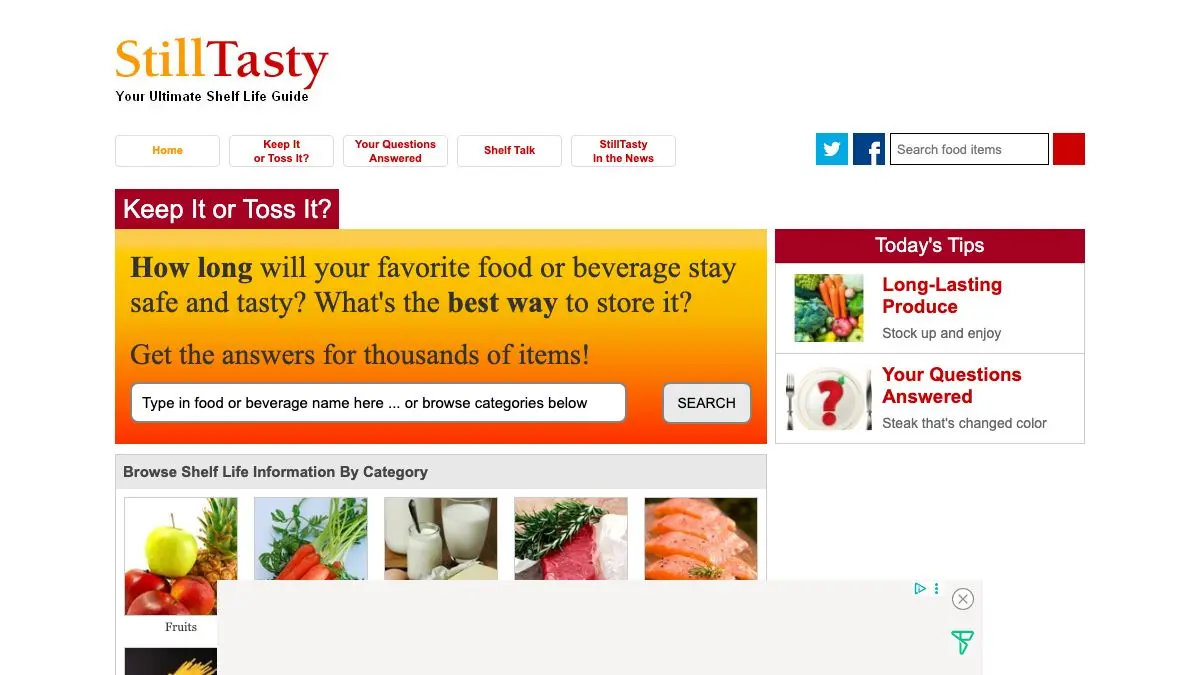
StillTasty answers the question you are standing in front of the open fridge asking. How long has this been in here? Is it fine? Does opening it change anything? Can I freeze it and deal with this later?
It is a database of shelf lives for thousands of foods, and it is the reference that ends the recurring household debate about whether the jar in the back of the door is a condiment or a science project.
What is StillTasty?
Food dating in most countries is a mess. The stamp on the package might say “best before”, “use by”, “sell by” or “best if used by”, and those phrases mean genuinely different things, most of which are about quality rather than safety, and none of which account for the fact that you opened the package eleven days ago.
Meanwhile the actual guidance about how long food keeps exists, published by food safety agencies and industry bodies, but it is scattered across dozens of PDFs and fact sheets that nobody is going to consult while holding a carton of cream.
StillTasty’s contribution is to collect all of it into one searchable place and present it in the only format that matters: type the food, get the numbers. Search “cooked chicken” and you get how many days in the fridge, how many months in the freezer, and how to store it so those numbers hold. Search “opened jar of pasta sauce” and you get the shorter, more urgent answer that the unopened figure would have hidden.
The database goes far wider than the obvious perishables. Flour, hot sauce, coffee beans, hard cheese, canned beans, frozen shrimp, boxed wine, baking powder, leftovers from restaurants. Each entry splits storage by location and by opened versus unopened, and adds practical notes: whether freezing damages texture, what proper storage actually means, what spoilage looks like in that specific food.
There are also topic articles and roundups covering the general rules of the kitchen, food safety after a power outage, how long things last at room temperature, and the perennial question of what the date on the package is really telling you.
None of it is glamorous. All of it prevents either a wasted good ingredient or a bad evening.
What can you do with StillTasty?
- Look up any specific food. Search by name and get pantry, fridge and freezer times in one table, opened and unopened kept separate.
- Settle the leftovers question. Cooked dishes have their own entries, which is where most household uncertainty actually lives.
- Check whether something freezes well. The site distinguishes between “safe to freeze indefinitely” and “safe, but the texture will be ruined”, which is a distinction that matters.
- Decode the date on the package. Articles explaining what sell-by, use-by and best-before actually commit the manufacturer to, and what they do not.
- Learn the storage conditions. Each entry includes how to store the item properly, since every number on the site is conditional on doing that.
- Read the spoilage signs. What off looks and smells like for that particular food, rather than a generic warning.
- Browse by category. Dairy, meat, produce, pantry staples and prepared foods, useful when you want to audit a whole shelf rather than one item.
Tips to get the most out of it
Search the state of the food, not just its name. “Chicken” and “cooked chicken” and “chicken, raw, frozen” are different entries with very different answers. Being specific about cooked versus raw and opened versus sealed is the whole game.
Use it as a boundary, not a verdict. The numbers assume correct storage the entire time. If a package sat in a warm car for two hours, the clock is not the clock anymore. Your nose and eyes still outrank the database.
Check it before you shop, not after. Looking up how long the things you buy weekly actually last is a quietly effective way to stop throwing food away. Most people badly misjudge which items are the fragile ones.
Look up the freezer column for anything you are about to waste. A large fraction of food thrown out on the day it turns is food that could have gone in the freezer three days earlier. The freezer times on this site are frequently longer than people assume.
Read the storage notes for pantry staples. Flour, nuts, spices and oils have shelf lives that swing wildly depending on light, heat and whether they are sealed. This is where the notes earn their keep.
When the site is ambiguous, discard. It says as much itself. The cost of being wrong is asymmetric, and no lookup table knows what actually happened to the container in your fridge.
If you like StillTasty, also try…
- Supercook: tell it what you already have and it finds recipes, which is how you use things before the clock runs out.
- Falling Fruit: a map of free edible plants and fruit trees growing in public space near you.
- Omni Calculator: the calculator for every kitchen conversion, scaling and portion question.
- MuscleWiki: another plain, practical reference that answers a specific everyday question without fuss.
More genuinely useful references in Tools & Utilities, and things that save you time in Productivity.
Frequently asked questions
What is StillTasty?
StillTasty is a searchable shelf life guide covering thousands of foods and drinks. For each item it gives storage times for the pantry, refrigerator and freezer, separated by whether the package is opened or unopened, along with storage advice and signs of spoilage. Its guidance draws on published food safety sources including US government agencies and food industry data.
Is StillTasty free?
Yes, the site is free to use and requires no account. It is supported by advertising. There is no paywall on the shelf life database itself, which is the part almost everyone comes for.
Does StillTasty tell me if food has gone bad?
It gives you the expected safe storage window and typical signs of spoilage, which is different from inspecting the actual item in your fridge. Treat it as the outside boundary rather than a guarantee: if something is inside the recommended window but smells wrong, looks wrong or has been left out of refrigeration, the site's own advice is to discard it.
What is the difference between a use-by date and what StillTasty says?
Printed dates on packaging are largely about peak quality as judged by the manufacturer, and in most categories they are not safety deadlines. StillTasty focuses on how long the food remains safe and reasonable to eat under proper storage, which is often considerably longer than the date on the box, and occasionally shorter once a package has been opened.