// 2026-07-25 · Data & Research · by Bob Smith
The Pudding: Visual Essays for Oddly Specific Questions
The Pudding answers questions nobody thought to ask, using real data and gorgeous interactive graphics. Free visual essays that eat your whole afternoon.
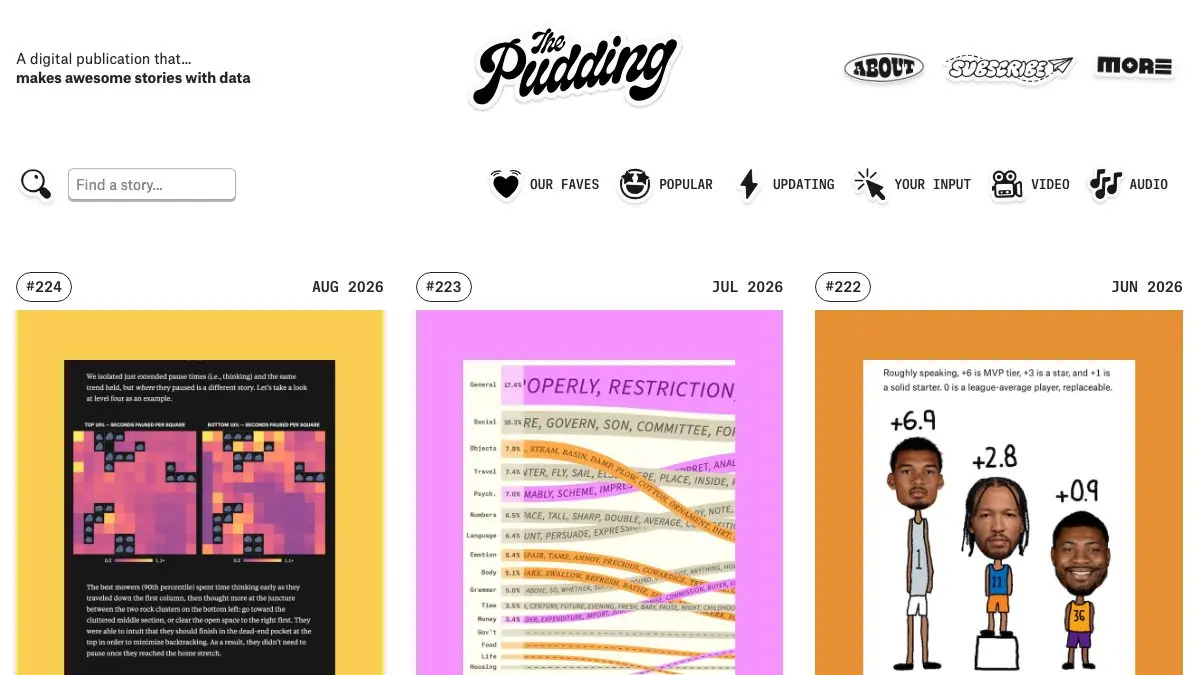
The Pudding is a digital publication that answers oddly specific questions with real data and beautiful interactive graphics. Not “here is a chart next to some paragraphs”, the chart is the story, and you scroll, hover, and click your way to the punchline. Every piece is free, and you will absolutely lose an afternoon in the archive.
What is The Pudding?
Somewhere between a magazine, a research lab, and a very good design studio sits The Pudding. The team is small, and the people who write the stories are usually the same people who code and design them. That is the whole trick. Nobody hands a finished article to a graphics department. The question, the data, and the visuals grow up together, which is why the results feel less like reporting and more like being handed a toy that happens to contain a fact.
The questions are gloriously unserious on the surface and quietly rigorous underneath. Recent work has dug through thousands of restaurant menus to watch American food change over decades, mapped out how the generations of K-pop actually break down, and taken apart the humble simile. Sports, language, music, love, mowing the lawn, nothing is too small if the data exists and the answer is interesting.
What can you do on The Pudding?
- Read a story with your hands. Most pieces are scrollytelling: the graphic reacts as you move down the page, so the argument unfolds instead of sitting still.
- Play with the data yourself. Plenty of stories include a search box or a filter: type in your own name, your own city, your own favorite band, and see where you land in the dataset.
- Raid the archive. Years of stories, all still live, all still free. This is the good part. Pick a category and just keep going.
- See the workings. The Pudding is unusually open about process, publishing notes on how stories get made and what tools were used. If you make charts for a living, this is a free education.
- Pitch them. They take story ideas from outsiders. If you have a weird question and a way to get the data, there is a door.
Tips to get the most out of it
- Use a real screen. These stories are responsive and work on a phone, but the big interactive pieces were built for a laptop. Give them the space.
- Don’t skim. Scroll slowly through the graphic sections. If you speed past, the animation fires without you and the point lands flat. The pacing is deliberate.
- Look for the input box. A surprising number of stories become ten times better once you put your own data in. That is where “interesting article” turns into “text this to three friends immediately.”
- Go archive diving on a theme. Their language and music stories are a genre of their own. Read three in a row and you start to see the house style, set up a dumb question, answer it with an absurd amount of care.
- Grab the newsletter. New pieces land irregularly rather than daily, so the email is the easiest way not to miss one.
If you like The Pudding, also try…
- Information Is Beautiful: the other great data-visual destination, more gallery than magazine, and just as pretty.
- Our World in Data: when you want the big global numbers with sources attached, charted properly and updated constantly.
- Worldometers: live counters ticking over in real time, for when you want your data with a pulse.
Want more of this kind of thing? The whole Data & Research shelf is full of it. Start with The Pudding, though. It’s the one that turns “I’ll just read one” into a lost evening.
Frequently asked questions
What is The Pudding?
The Pudding is a digital publication that makes visual essays, journalism built out of interactive charts, animations, and scrollable graphics instead of long blocks of text. Each story takes an oddly specific question and answers it with real data. Topics range from pop music and language to sports, food, and internet culture.
Is The Pudding free?
Yes. Every story on The Pudding is free to read, with no paywall and no account required. The team funds the work through Patreon support, merchandise, and their sister studio, so reading costs you nothing but time.
Who makes The Pudding?
The Pudding is made by a small editorial team of journalist-engineers who write, report, design, and code their own stories. They also accept pitches from outside contributors, so a lot of the archive comes from freelancers with a good question and the data to answer it.
What makes The Pudding different from a normal news site?
Most articles put a chart next to the words. The Pudding builds the whole argument out of the chart. You scroll, hover, click, and sometimes play with the data yourself, so the finding lands because you found it rather than because a sentence told you.